

Enhanced IP Network Controller with Redundancy
17.3" Full HD • Intel Core i7 • 256G SSD • Dual NIC Redundancy • Dual Graphics • Active-Standby Switch
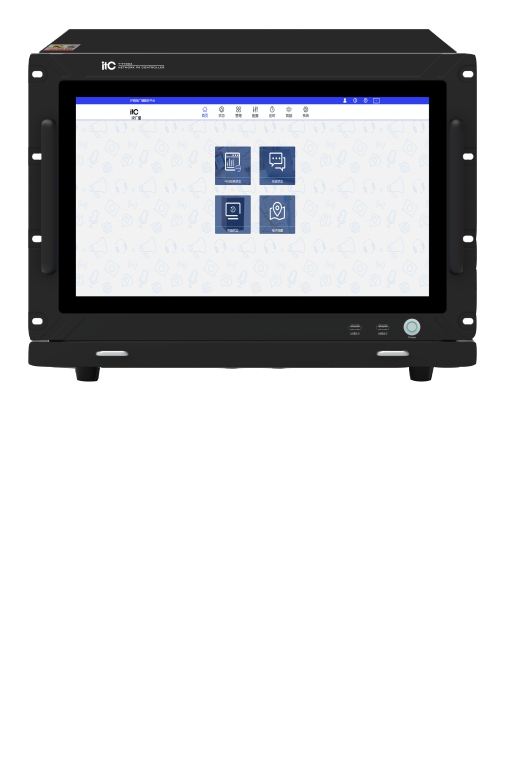
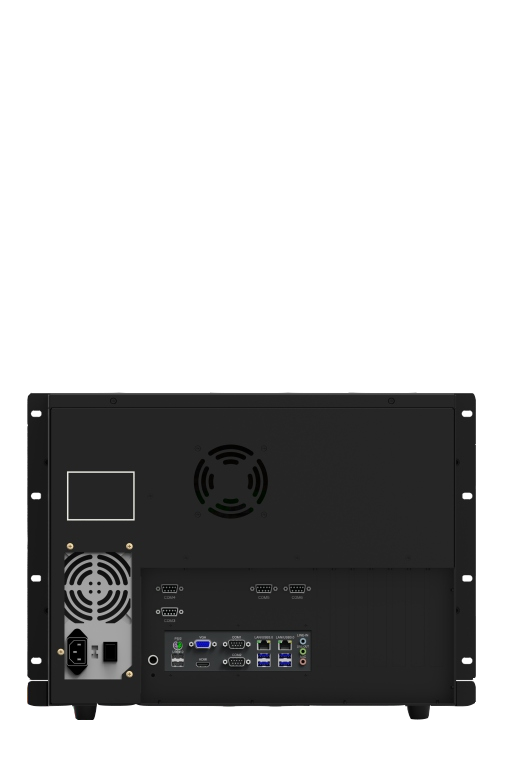
T-7700A (Hardware)
Premium hardware for mission-critical deployments. The T-7700A elevates the T-7700 series controller platform with an Intel Core i7 processor, 256GB SSD, and dual NIC redundancy. Engineered for environments requiring maximum uptime, it features dual graphics support, integrated recording storage, and active-standby switch capability. The 17.3" Full HD display provides crystal-clear visualization of system status and terminal maps.
| Model Number | T-7700A |
| Product Type | High-Performance IP Network Controller |
| Display | 17.3" Full HD (1920x1080), LED-backlit, Capacitive Touch |
| Processor | Intel Core i7 (8th Gen or higher) |
| Memory | 16GB DDR4 RAM (expandable to 32GB) |
| Storage | 256GB SSD (SATA III) |
| Recording Storage | Integrated partition for event/voice recording |
| Operating System | Windows Server 2016 (pre-installed, optimized) |
| Graphics | Dual Graphics Support (Integrated + dedicated optional) |
| Ethernet | 2 x Gigabit LAN (Intel I210, redundant failover) |
| USB Ports | 6 x USB 3.0, 4 x USB 2.0 |
| Serial Ports | 4 x RS232 (DB9), 2 x RS232/422/485 (selectable) |
| Video Output | 1 x VGA, 1 x HDMI, 1 x DisplayPort |
| Audio | Line-out, Mic-in (3.5mm), 7.1 channel HD audio |
| Redundancy | Active-Standby switch support (T-7700SR ready) |
| Expansion | 2 x PCIe x16 slots, 1 x PCIe x4 |
| Power Supply | AC 100-240V, 50/60Hz, 350W (80+ Platinum) |
| Special Feature | Auto power-on, short-circuit boot trigger, watchdog timer |
| Mounting | Rack mount kit included (4U), desktop stand optional |
| Dimensions (WxHxD) | 483 x 178 x 480 mm (19" rack) |
| Weight | Approx. 14 kg |
| Operating Temperature | 0°C – 45°C |
| Storage Temperature | -20°C – 70°C |
| Humidity | 10% – 95% non-condensing |
| Certifications | CE, FCC, RoHS, UL |
The T-7700A is the enhanced-performance hardware controller for the ITC T-7700 Series IP network audio system. Building upon the proven T-7700 platform, it delivers a significant performance upgrade with Intel Core i7 processing, 256GB SSD, and 16GB RAM – ideal for larger deployments, more concurrent users, and advanced recording requirements.
Designed for 24/7 mission-critical operation, the T-7700A features dual NIC redundancy for automatic network failover and active-standby switch capability when paired with a second unit and T-7700SR software. Integrated recording storage provides dedicated space for voice logging and event archiving. The 17.3" Full HD capacitive touch screen delivers superior clarity and responsiveness compared to standard resistive panels.
Two independent Gigabit Ethernet ports with automatic failover. Zero downtime during network path failures – critical for emergency broadcasting systems.
Seamless integration with T-7700SR hot backup software. Automatic switchover in <300ms ensures uninterrupted paging and intercom.
Dedicated partition for voice recording, intercom logs, and alarm events. Configurable retention policies, supports external NAS archiving.
Integrated Intel UHD Graphics + optional NVIDIA/AMD GPU support. Drive up to three independent displays for expanded command center views.
The T-7700A supports factory upgrades: 32GB RAM, 512GB/1TB NVMe SSD, 10GbE SFP+ cards, hardware RAID, and discrete graphics (NVIDIA T400/RTX A2000). Contact ITC for build-to-order configurations.
| Model | Processor | RAM | Storage | Key Feature | Best For |
|---|---|---|---|---|---|
| T-7700 | Core i5 | 8GB | 128G SSD | 6xCOM, 8xUSB | Standard deployment |
| T-7700A | Core i7 | 16GB | 256G SSD | Dual NIC, active-standby, recording | Mission-critical, redundancy |
| t-7700h | Dual Xeon | 32GB | 1TB HDD+128G SSD | IPMI, enterprise rack | Large scale, 1000+ endpoints |
The T-7700A is specifically engineered for high-availability environments. When paired with a second T-7700A and T-7700SR software, the system provides seamless active-standby failover with synchronized configuration and recording. Dual NIC teaming adds additional network-layer redundancy.