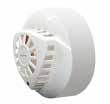

FW2522 - Fixed Temperature & Rate-of-Rise Detection
Reliable Heat Sensing • Industrial Applications • Harsh Environment Rated
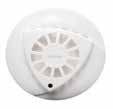
FW2522
The FW2522 Conventional Heat Detector provides reliable fire detection through temperature sensing in environments where smoke detectors are not suitable. Features both fixed temperature and rate-of-rise detection for comprehensive fire protection in industrial, commercial, and harsh environments.
| Model Number | FW2522 |
| Product Name | Conventional Heat Detector |
| Detection Type | Fixed Temperature & Rate-of-Rise |
| System Type | Conventional (Non-Addressable) |
| Wiring Configuration | 2-Wire or 4-Wire Selectable |
| Fixed Temperature Rating | 135°F / 57°C (Standard) |
| Rate-of-Rise Sensitivity | 15°F (8.3°C) per minute |
| Certification | UL 521, EN 54-5 |
| Manufacturer | Maple Armor / Tongfang |
| Warranty | 3-Year Standard |
| Operating Voltage | 12-30VDC |
| Standby Current | 20μA @ 24VDC |
| Alarm Current | 40mA @ 24VDC |
| Alarm Indication | Red LED (360° visible) |
| Test Method | Functional Test via Test Switch |
| Operating Temperature Range | -20°C to +70°C (-4°F to 158°F) |
| Storage Temperature | -30°C to +80°C (-22°F to 176°F) |
| Relative Humidity | 0% to 95% RH (Non-condensing) |
| Dimensions | 4.0" diameter x 1.7" height (102mm x 43mm) |
| Weight | 5.5 oz (156g) |
| Color | White (Standard), Custom colors available |
| IP Rating | IP44 (Splash resistant) |
The FW2522 Conventional Heat Detector is a dual-element heat detector designed for reliable fire detection in environments where smoke detectors are impractical or would cause nuisance alarms. It combines both fixed temperature and rate-of-rise detection technologies for comprehensive fire protection.
Combines fixed temperature and rate-of-rise detection for maximum reliability.
Configurable for both 2-wire and 4-wire conventional fire alarm systems.
Designed for harsh environments where smoke detectors are not suitable.
Activates when ambient temperature reaches 135°F (57°C). Factory calibrated for accuracy.
Detects rapid temperature increases of 15°F (8.3°C) per minute or more.
Microprocessor-based analysis for reliable detection and reduced false alarms.
135°F / 57°C (Standard)
Most common rating for general applications
190°F / 88°C (High Temp)
For areas with high ambient temperatures
250°F / 121°C (Extra High)
For industrial ovens, furnaces, etc.
Power and alarm signals on same pair. Maximum detectors per circuit: 20.
Separate power and alarm circuits. Allows remote annunciation.
Internal jumper selects between 2-wire and 4-wire operation.
| Ceiling Height | Maximum Spacing | Maximum Area per Detector |
|---|---|---|
| Up to 10' (3m) | 50' (15m) | 2500 ft² (232 m²) |
| 10'-30' (3-9m) | 30' (9m) | 900 ft² (84 m²) |
| Over 30' (9m) | Consult NFPA 72 | Engineering required |
Where smoke from cooking would cause nuisance alarms.
Areas with dust, fumes, or high humidity where smoke detectors fail.
Vehicle exhaust would trigger smoke detectors prematurely.
Reliable: No nuisance alarms from dust or humidity
Robust: Suitable for harsh environments
Flexible: 2-wire or 4-wire configuration
Cost-Effective: Lower maintenance than smoke detectors
Easy Maintenance: Simple testing and cleaning
Scalable: Easy to expand existing systems
| Feature | Heat Detector | Smoke Detector |
|---|---|---|
| Detection Method | Temperature increase | Smoke particles |
| Response Time | Slower (heat must build) | Faster (early warning) |
| Nuisance Alarms | Very low | Possible from dust, steam |
| Suitable Environments | Dusty, humid, kitchens | Clean, office, residential |
| Maintenance | Low (no cleaning needed) | Regular cleaning required |